What Is Farmers for Soil Health?
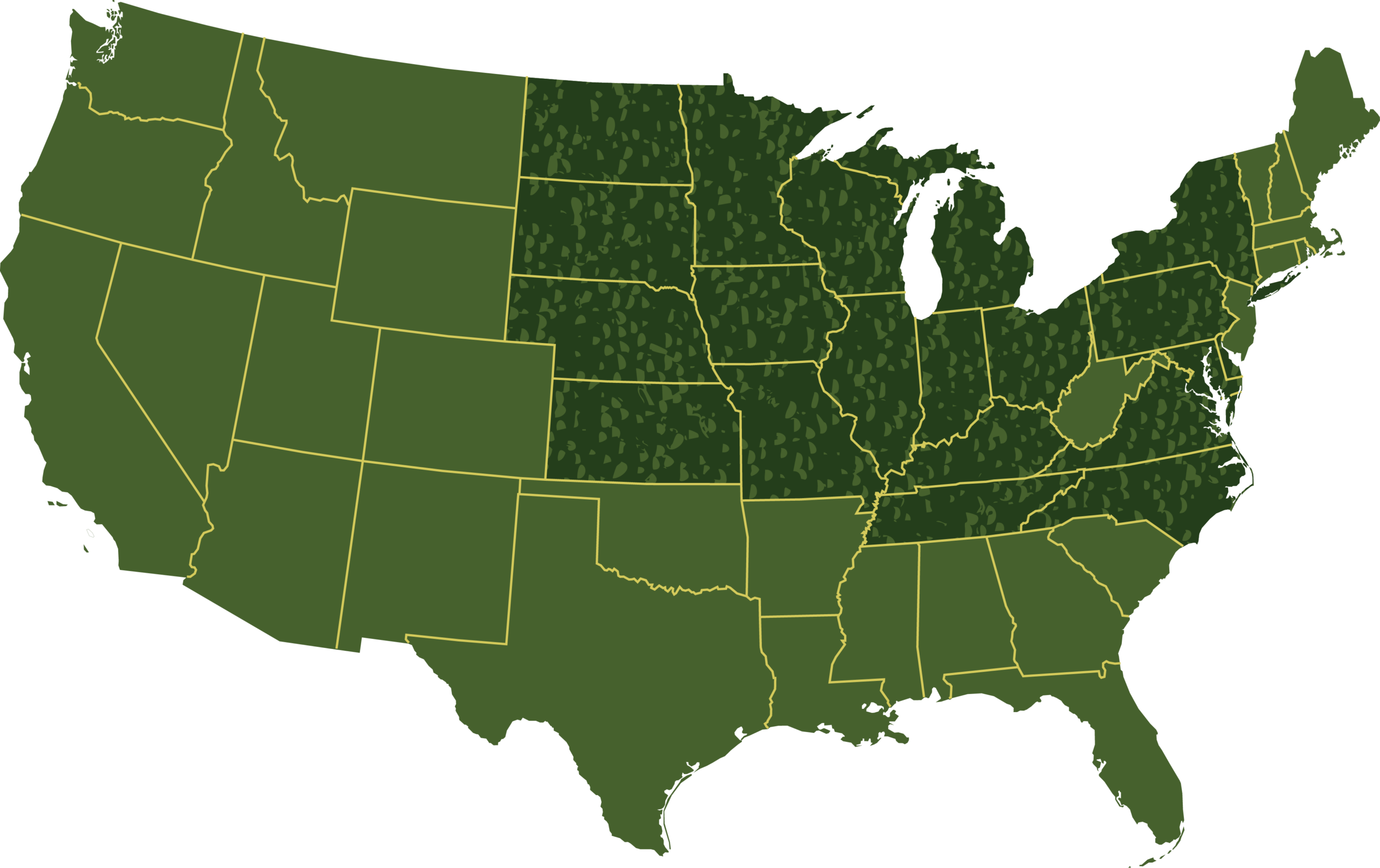
Farmers for Soil Health is a 20-state program created by farmers for farmers and is committed to enhancing soil health practices, like planting cover crops, to improve the environment and profitability of farmers. The program provides financial incentives and local research-based technical support to help farmers with field transition.
Who Can Enroll?
Any corn, soybean, wheat, grain sorghum, or cotton farmer operating within the 20 participating program states is eligible to enroll in Farmers for Soil Health, regardless of cover crop history.
The participating states include Delaware, Illinois, Indiana, Iowa, Kansas, Kentucky, Maryland, Michigan, Minnesota, Missouri, Nebraska, New York, North Carolina, North Dakota, Ohio, Pennsylvania, South Dakota, Tennessee, Virginia and Wisconsin.
Get Paid to Improve Your Soil
Whether you’re transitioning to soil health practices for the first time or expanding your current usage, Farmers for Soil Health offers financial incentives to help offset the costs. These incentives allow you to try new practices while setting your farm up for long-term profitability and resilience.
Enroll today to receive up to $35 per acre, per year, for a maximum of 2,000 acres each year for planting cover crops.
Enjoy flexible, 1-year enrollment contracts that you can renew for the duration of the program.

One-on-One Support From Local Experts
You won’t be figuring this out alone. Enrolling in Farmers for Soil Health provides you access to dedicated technical advisors in your area. They not only understand the variables you face but can meet you in your fields to provide hands-on, boots-on-the-ground assistance whenever you need it. Here are some ways your technical advisor can help you:
Selecting cover crop species that best fit your operation and goals
Understanding eligibility and program requirements
Navigating reporting and enrollment with confidence
How It Works
- Sign Up Today → Click here to login or create an account with our technology partner, DTN.
- Get Contacted → Your state TA is automatically notified once you enroll, and will contact you within 5 business days to walk through the enrollment requirements and next steps.
- Enroll → Work with your state TA to gather and submit enrollment documentation.
- Uncover Earnings → Receive financial incentives and local support.
Have Questions?
Click the drop-downs below to find answers to commonly asked enrollment questions. If your question isn’t listed, reach out to your State Technical Advisor for assistance.
What information will farmers be required to provide to sign up for payments?
- Participating farmers will need to provide the following information to their state FSH Technical Advisor (TA), or sign a data release form to allow their state TA to access and/or confirm the following information:
- Their USDA farm, tract and field numbers. Farmers without farm, tract and field numbers can obtain them from their local USDA Farm Service Agency field office.
- They must confirm with their state TA that they are not concurrently receiving USDA NRCS cover crop payments, including other AMP projects, on the same acres.
- Compliance with USDA Highly Erodible Land and Wetland Conservation requirements is required. If a producer’s FSA Subsidiary Print indicates “not filed” for this certification, the producer will need to complete form AD-1026 with FSA and provide an updated Subsidiary Print showing the status as “certified.”
- They will plant cover crop acres enrolled in the program according to state NRCS conservation practice standards for practice code 340 (cover crop), or an alternate practice standard pre-approved by USDA and Farmers for Soil Health partners.
- Each field the farmer intends to enroll will need an approved NRCS CPA-52 Environmental Evaluation prior to implementing cover crops. FSH TAs will guide the farmer to identify the fields, enter necessary information, and submit to NRCS for approval.
Can Farmers for Soil Health payments be stacked with other financial assistance opportunities?
Farmers for Soil Health (FSH) payments can be stacked with other project payments if they are paying for something other than the cover crop practice. FSH payments cannot be stacked with USDA NRCS cover crop cost-share payments. FSH payments can be stacked with other state or private (non-federal) incentives and cost-share opportunities, as long as the other opportunities allow stacking.
How will farmers receive their payments?
- The National Fish and Wildlife Foundation (NFWF) will issue payments to participating farmers.
- Farmers for Soil Health participants will receive $35 per acre, per year, for planting cover crops on up to 2,000 acres. Contracts can be renewed annually for the duration of the Farmers for Soil Health program, regardless of cover crop or history.
- Payments are expected to be disbursed in the next year(s) following planting of a cover crop the previous fall. Cover crop planting will be verified by remote sensing through the Farmers for Soil Health Measurement, Reporting and Verification (MRV) platform.
How will farmer data privacy be protected after enrollment?
Enrollment in the FSH program through DTN is built on a foundation of security and transparency. A key requirement is that farmers are in control of their data and can decide who may access it and how it can be used. For every offer, either Farmers for Soil Health or others from the private sector will transparently inform the farmer if their data will be shared or used by or with any third party.
For the FSH AMP Partnership, any data a farmer provides will be used to ensure compliance with USDA and Farmers for Soil Health program requirements and for the measurement of carbon and other environmental impacts in the aggregate. This data will be anonymized and reported publicly only in aggregate.
Specific farmer data associated with named individuals, addresses, collection points, etc., will not be sold, shared or distributed to any third parties without express permission from the farmer. Any third-party data sharing will be subject to a licensing agreement for disclosure to that party only.